
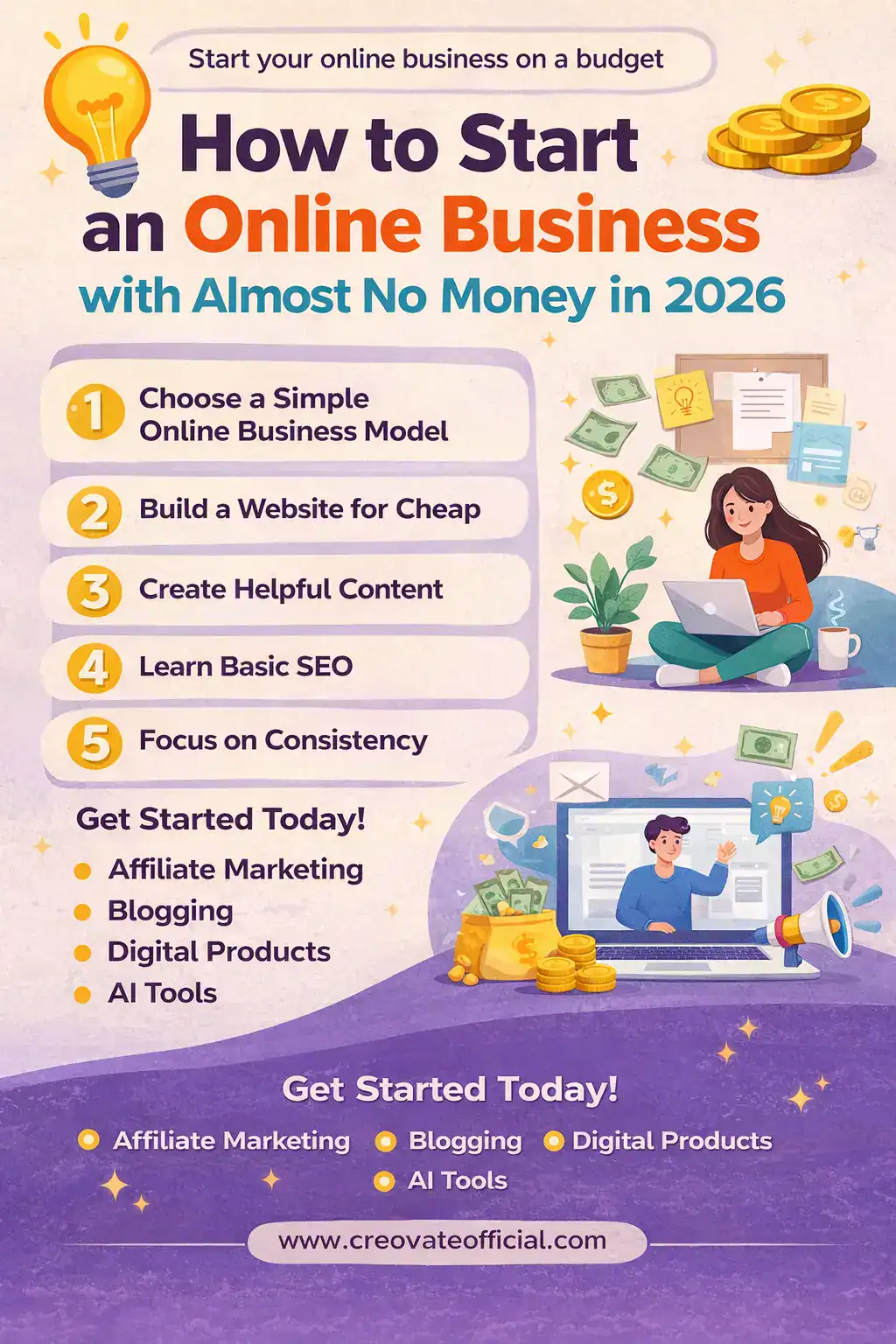
What if you could start an online business today without a big investment, expensive tools, or a team?
The truth is, in 2026 you don’t need thousands of dollars to get started. With the right tools and a clear plan, anyone can build an online business from scratch. When I first started exploring online business, I thought it required a lot of money and technical skills. But the more I learned, the more I realized something important — starting is much easier than most people think.
In this article, I’ll walk you through a simple beginner-friendly path to starting an online business with very little money, even if you’re just getting started.
Why Starting an Online Business Is Easier Than Ever
A few years ago, building a business online required developers, designers, and expensive marketing tools. Today, things are different.
With platforms and AI tools available today, you can:
- Build a website in a few hours
- Create blog posts and marketing content
- Design graphics and social media posts
- Promote products and earn commissions
Many beginners use tools like ChatGPT to generate ideas, write drafts, and brainstorm business strategies faster.
This dramatically reduces the time and effort needed to get started.
Step 1: Choose a Simple Online Business Model
Before doing anything else, decide how you want to make money online.
Some beginner-friendly options include:
- Affiliate marketing
- Blogging
- Selling digital products
- Freelancing
- Content creation
Affiliate marketing is one of the easiest models because you don’t need to create your own product. Instead, you recommend tools or services and earn a commission.
For example, many bloggers recommend platforms like Shopify to people who want to start an online store.
Step 2: Build a Simple Website
Your website is the place where people discover your content and recommendations.
The good news is that building a website today doesn’t require coding knowledge.
Many beginners design their sites using tools like Elementor because it allows you to create pages with simple drag-and-drop features.
Your website can include:
- Blog posts
- Tool recommendations
- Tutorials
- Product reviews
The goal is to create helpful content that solves problems for your audience.
Step 3: Create Helpful Content
Content is the foundation of most successful online businesses.
Instead of trying to sell immediately, focus on helping people first.
Write articles like:
- Best tools for online business
- Beginner marketing guides
- Product comparisons
- Step-by-step tutorials
For example, design tools like Canva make it easy to create graphics, blog images, and social media posts even if you have no design experience.
Helpful content builds trust, and trust leads to clicks and conversions.
Step 4: Learn Basic SEO
If you want people to find your content through Google, SEO is extremely important.
SEO (Search Engine Optimization) helps your website appear when people search for topics related to your content.
For example, someone might search:
- “best online business tools”
- “how to start affiliate marketing”
- “best AI tools for blogging”
WordPress SEO plugins like Rank Math help optimize blog posts, keywords, and content structure so search engines can understand your website better.
Over time, SEO can bring consistent free traffic.
Step 5: Focus on Consistency
One thing I learned early is that online business is not about quick success.
It’s about consistency.
Publishing helpful content regularly helps you:
- Build authority
- Grow website traffic
- Improve search rankings
- Increase affiliate conversions
Even publishing one article per week can make a big difference over time.
Small steps add up.
Starting an online business in 2026 doesn’t require huge investments or advanced technical skills.
What matters most is:
- Choosing the right niche
- Creating helpful content
- Learning basic SEO
- Staying consistent
With the tools available today, almost anyone can start building something online.
And who knows? The article you publish today might become the one that brings your first visitor, your first subscriber, or even your first sale.