
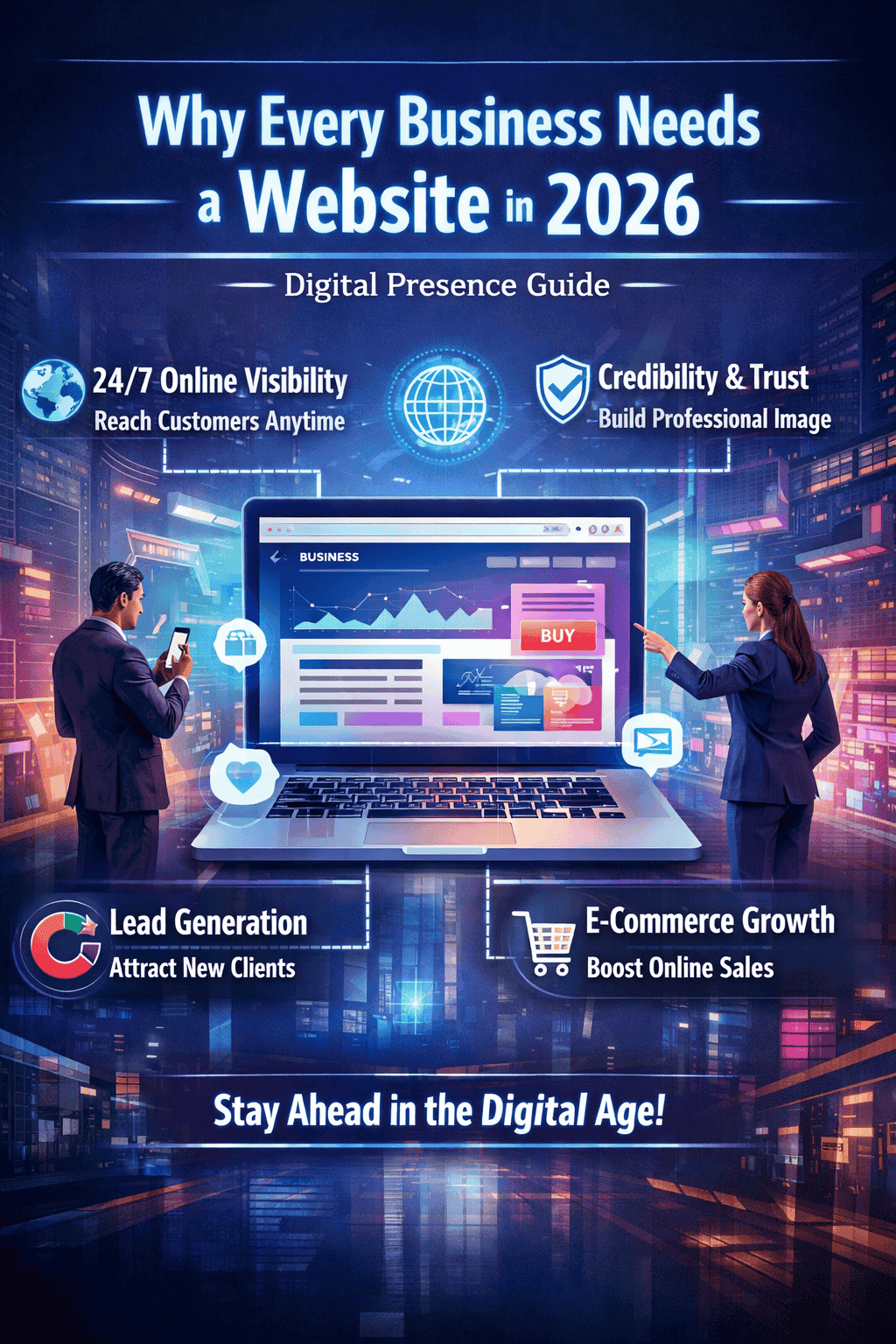
Discover why a website is essential for your business in 2026. Explore tips, benefits, and strategies to establish a strong digital presence.
Introduction
Imagine running a vibrant shop filled with unique products, yet nobody knows it exists. This is the harsh reality for many businesses without a website in today’s digital age. It’s not just a matter of convenience; having an online presence is crucial for success in 2026. Many potential customers will judge your credibility based on your website, and without one, you risk missing out on opportunities.
Every entrepreneur faces a challenge: how do you make your mark in an ever-competitive environment? The answer lies in establishing a robust digital presence through a professional website. Whether you are a beginner, a blogger, or an ambitious entrepreneur, having a website is no longer optional—it’s essential. In this blog post, we will explore why your business needs a website, the benefits it brings, and steps to create an effective online presence that captures attention and drives results.
Table of Contents
- What is a Business Website?
- Why Every Business Needs a Website in 2026
- Benefits of Having a Website
- Step-by-Step Guide to Creating Your Website
- Best Tools for Building a Website
- Common Mistakes to Avoid
- Pro Tips for Success
- Real-Life Examples
- Beginner-Friendly Tips
- Conclusion
- FAQ Section
What is a Business Website?
A business website is your online storefront—a digital platform where you showcase your products or services, convey your brand message, and interact with customers. It serves as a marketing tool that reflects your business identity and builds credibility in the eyes of potential clients. A well-crafted website provides essential information such as your offerings, pricing, contact details, and customer testimonials, all available 24/7.
Why Every Business Needs a Website in 2026
As we venture into 2026, the landscape of consumer behavior continues to evolve. Online shopping and internet research have become the norm, making a business website indispensable. Here’s why:
The Digital Shift
With increasing reliance on digital solutions, customers expect businesses to have an online presence. According to a study by Statista, over 50% of retail sales are projected to come from e-commerce in the next few years. If your business isn’t online, you’re effectively missing out on a significant share of potential customers.
Credibility and Trust
A professional website is often the first point of contact for new customers. Without one, your business may appear outdated or untrustworthy. A well-designed website showcases your professionalism and establishes trust, essential for converting visitors into loyal customers.
Competitive Advantage
In a saturated market, a distinct online presence sets you apart from competitors. A website allows you to highlight your unique selling propositions and communicate your brand story effectively.
Cost-effective Marketing
Having a website significantly reduces your marketing costs compared to traditional advertising. Digital marketing strategies, such as content marketing, SEO, and social media advertising, can efficiently drive traffic to your site and generate leads.
Benefits of Having a Website
- 24/7 Accessibility: Your business is reachable around the clock, catering to customers from different time zones.
- Increased Reach: Expand your market beyond geographic boundaries, allowing you to reach a global audience.
- Branding Opportunity: Express your brand identity through design, content, and customer engagement.
- Lead Generation: Your website can capture leads through forms, newsletters, and calls to action, nurturing prospective clients.
- Analytics and Insights: Gain valuable insights into customer behavior and preferences to refine your offerings.
Step-by-Step Guide to Creating Your Website
Creating a website might seem overwhelming, but breaking it down into manageable steps can simplify the process. Here’s a comprehensive guide to get you started:
Step 1: Define Your Purpose
Before moving forward, identify the main goal of your website. Is it to sell products, share information, or generate leads? Understanding your purpose will guide your design and content strategy.
Step 2: Choose a Domain Name
Select a memorable domain name that reflects your brand. Ideally, keep it short and relevant. Use domain registration sites like GoDaddy or Namecheap to check availability and secure your domain.
Step 3: Select a Website Builder
Decide on a platform that suits your needs. Options like WordPress, Wix, and Shopify offer user-friendly interfaces and customizable templates for various business types.
Step 4: Design Your Website
Focus on a clean, responsive design that enhances user experience. Ensure it aligns with your brand colors, fonts, and ethos. Utilize tools like Canva to create engaging visuals.
Step 5: Optimize for SEO
Incorporate keywords relevant to your business throughout your content, including in headings, meta descriptions, and image alt text. This helps improve your ranking on search engines, making it easier for customers to find you.
Step 6: Launch and Promote
Once your website is complete, hit that launch button! Promote your site through social media, email marketing, and other marketing channels to attract visitors.
Best Tools for Building a Website
- Website Builders: WordPress, Wix, Shopify
- Graphic Design: Canva, Adobe Spark
- SEO Tools: Yoast SEO, SEMrush, Ahrefs
- Analytics: Google Analytics, Hotjar
- Email Marketing: Mailchimp, Constant Contact
Common Mistakes to Avoid
- Neglecting Mobile Optimization: Ensure your website is mobile-friendly to cater to users who browse on their smartphones.
- Overcomplicating Design: Keep the design simple with straightforward navigation to enhance user experience.
- Ignoring SEO: Failing to optimize content can lead to low visibility on search engines.
- Lack of Regular Updates: Keep your site content fresh and relevant to engage returning visitors.
Pro Tips for Success
- Invest in Professional Design: If needed, consider hiring a web designer to create a polished look that aligns with your brand.
- Utilize Content Marketing: Create valuable content that addresses your audience’s questions and pain points, driving organic traffic.
- Build an Email List: Encourage visitors to subscribe for newsletters or updates; this establishes a direct line of communication.
- Encourage Customer Feedback: Use testimonials and reviews to build social proof and credibility.
Real-Life Examples
- Blue Apron: Revolutionized meal delivery, leveraging a simple yet effective website to enhance user experience while showcasing delicious meal options.
- Warby Parker: Created a seamless online shopping experience, enabling customers to try glasses from home with their “Home Try-On” program.
- BarkBox: Utilizes engaging storytelling on its website to connect with pet owners, offering tailored subscription services.
Beginner-Friendly Tips
- Start with a Template: Use predefined templates to simplify design decisions, making the construction process quicker and easier.
- Use Tutorials: Plenty of online resources, including video tutorials, can guide you through website building. Websites like YouTube offer extensive help.
- Experiment and Learn: Don’t be afraid to try different things; learning by doing is often the best approach.
- Stay Informed: The digital landscape changes rapidly, so keep learning about new trends and techniques.
Conclusion
Having a website in 2026 is no longer a luxury—it’s a necessity for any business striving for growth, credibility, and customer engagement. By following the steps outlined in this guide, translating your ideas into a website can become a smooth and enjoyable process. Dive into the digital world confidently and allow your business to soar by building a strong online presence. Remember, the journey of a thousand miles begins with a single step—so take yours today!
FAQ Section
- Why is having a website crucial for a business?
- How do I choose the right platform for my website?
- What are the essential elements of a business website?
- Can I build a website on my own, or do I need professional help?
- How can I ensure my website is optimized for search engines?
#Business Website#Online Presence#Website Development# Digital Marketing# Small Business Growth.
Tutorial Guide:
How to Start an Online Business with Almost No Money in 2026
How to Start an Online Business in 2026
From Zero to Entrepreneur — How to Start Your Business Journey