🎁 Free: Online Income Starter Kit 2026
Grab our free starter kit with blog income templates, an AI prompt library, and a monetization checklist — no cost, just your inbox.
Something went wrong sending your email — but no worries, grab the kit directly here:
Download KitWe respect your inbox. Unsubscribe anytime.
Why Trust This Guide
How We Evaluated These Tools
This comparison is based on each tool's public documentation and feature pages, published pricing tiers at the time of writing, and a review of user feedback on sites like G2 and Reddit. We did not run formal side-by-side benchmark tests across all seven tools, so treat the pros, cons, and "best for" notes as an informed starting point — not a substitute for trying a tool yourself on your own content before subscribing.
01
Ranked by fit for common blogging needs, not by affiliate payout
02
Pricing described in general tiers only — confirm exact current rates on each vendor's site before buying
03
Guide updated as tools ship new features; last reviewed August 2026
💬 Affiliate disclosure: Some links on this page are affiliate links. If you sign up through one, we may earn a commission at no extra cost to you. Our ranking reflects our own editorial judgment, not which link pays the most.
What Makes a Good AI Writing Tool for Blogging
Not every AI writer is built for blogging. Some are optimized for short ad copy, others for chatbot conversations. Before you pay for anything, the tool should score well on four things:
- Long-form coherence — can it hold a consistent argument across 1,500+ words, or does it repeat itself by section four?
- SEO awareness — does it help with keyword placement, headings, and meta descriptions, or leave that entirely to you?
- Editability — can you steer tone and structure with a normal conversation, not rigid templates?
- Honest limitations — every AI tool hallucinates facts occasionally. The good ones make it easy to fact-check, not harder.
Common mistake: publishing the first AI draft without adding a personal example, opinion, or original data point. That's the single biggest reason AI-assisted posts get flagged as low-value by readers and by Google's helpful-content systems.
Buying Guide: How to Choose the Right Tool
What to Look For
- Long-form quality on a topic close to your own niche — test before you buy
- Clear monthly word or credit limits, not vague "unlimited" claims
- Export options that fit your CMS (Markdown, HTML, or direct integrations)
Budget Considerations
If you're publishing fewer than 8 posts a month, a free tier or the cheapest paid plan (Rytr, Copy.ai) is usually enough. Once you're past 20+ posts a month or managing other writers, tools like Jasper or Writesonic start paying for themselves in saved editing time.
Who Should Buy vs. Who Should Wait
Buy now if you're publishing consistently and spending more than 3–4 hours per post on drafting alone. Wait if you're still deciding on your niche — a paid tool won't fix an unclear content strategy.
Expert tip: Run the same prompt through two tools before subscribing to either. The difference in how much editing each output needs is the real cost comparison — not the sticker price.
Frequently Asked Questions
Can AI writing tools replace human bloggers?
No. They speed up drafting, research, and editing, but the blogs that hold up over time still rely on a human writer's judgment, first-hand experience, and editorial voice — the things Google's helpful-content and EEAT standards actually reward.
Which AI writing tool is best for SEO blog content?
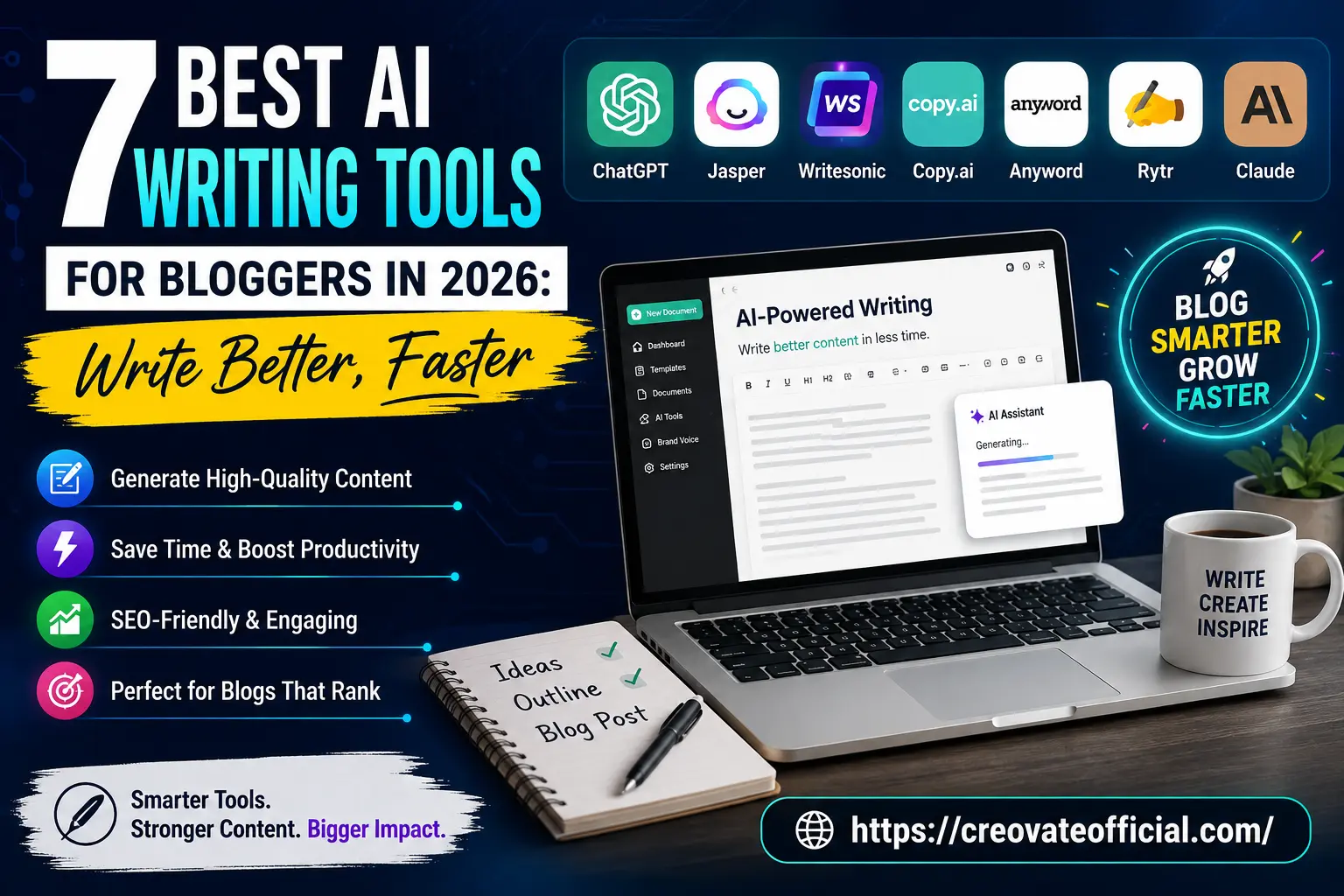
Writesonic and Anyword lead on built-in SEO and performance data. ChatGPT and Claude are stronger for long-form research and nuance, then you layer SEO optimization on afterward.
Is it safe to publish AI-generated blog posts on Google?
Google has stated it evaluates content on quality and helpfulness, not on whether AI was involved in producing it. That said, thin or unedited AI output tends to underperform, so editing, fact-checking, and adding real experience are worth the extra step.
What's the cheapest AI writing tool for new bloggers?
Rytr and Copy.ai are generally positioned as lower-cost options among the tools in this guide, making either a common starting point for bloggers on a tight budget. Always confirm current pricing on the vendor's site before subscribing.
Do I need more than one AI writing tool?
Most bloggers do fine with one primary tool for drafting and a second lightweight tool for short-form copy like headlines and social captions.
How much editing does AI-generated content actually need?
Plan on at least one full editing pass for facts, tone, and a personal example or two. Treat the AI draft as a strong first draft, not a finished post.
Will using AI writing tools hurt my blog's originality?
Only if you publish outputs unedited. Adding your own examples, opinions, and data is what keeps AI-assisted posts from reading like everyone else's AI-assisted posts.