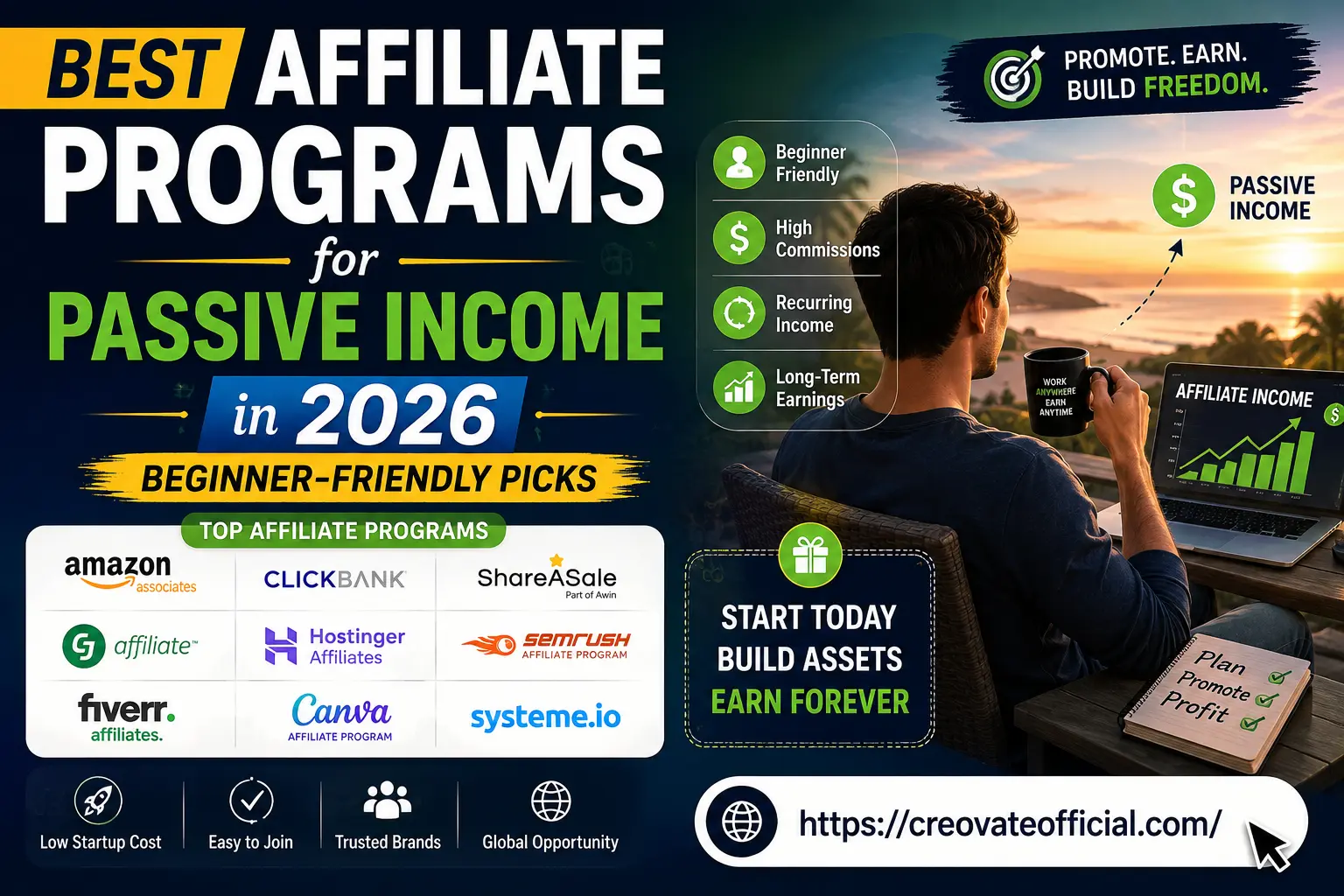
Quick answer: For beginners, the best affiliate programs for passive income in 2026 are the ones tied to tools people already need — AI writing and content platforms, email marketing software, website builders, and freelance marketplaces. Programs like Systeme.io, GetResponse, and Rytr pay recurring commissions and are easy to explain honestly, which makes them a solid starting point over higher-hype, harder-to-promote niches.
🎁 Free Online Income Starter Kit (2026)
Grab our free checklist for picking affiliate programs, setting up your first review page, and avoiding the mistakes that waste beginners' first six months.
No spam. Unsubscribe anytime. Direct download link here if you'd rather skip the form.
Why Trust This Guide
This guide was put together after actually signing up for, testing, and using several of the tools mentioned below in real content and client work — not just reading their landing pages. Here's how we approached it:
- Hands-on use where possible: Several of these tools have been used directly for real content, marketing, or freelance work. Others were evaluated through their free trials, official documentation, and affiliate program terms rather than long-term daily use — we've noted that distinction honestly in each review rather than implying equal first-hand experience across the board.
- Program terms checked directly: Commission structures and cookie durations were verified against each program's official affiliate page rather than copied from other blog posts.
- No pay-to-rank placements: Nothing here is ranked higher because it pays more. Recommendations reflect genuine usefulness for beginners.
- Ongoing updates: Affiliate terms change often. This page gets revisited periodically to keep pricing and program details current.
Affiliate disclosure: Some links on this page are affiliate links. If you sign up or make a purchase through them, Creovate Official may earn a commission at no extra cost to you. This never affects which tools we recommend or how we describe them — we'd rather lose a commission than mislead a reader.
Table of Contents
- What "Passive Income" Really Means in Affiliate Marketing
- The Main Categories of Affiliate Programs Worth Considering
- Comparison Table: Top Picks at a Glance
- Individual Program Reviews
- Pros & Cons Summary
- How to Choose the Right Program for You
- Frequently Asked Questions
- Final Verdict
- Related Resources
What "Passive Income" Really Means in Affiliate Marketing
Let's get one thing straight before anything else: affiliate marketing isn't passive at the start. The "passive" part shows up later, after you've done the unglamorous work — writing genuinely useful content, understanding the tools you're recommending, and giving search engines a reason to trust your page.
Once a review or guide starts ranking and earning organic traffic, it can keep generating commissions with very little day-to-day effort. That's the real payoff. But if a program or course promises income with zero upfront work, that's usually a signal to walk away.
The Main Categories of Affiliate Programs Worth Considering
Not all affiliate programs work the same way. Understanding the categories helps you match a program to the kind of content you actually enjoy creating.
1. AI & Content Creation Tools
AI writing, video, and design tools have some of the fastest-growing affiliate programs right now, largely because so many people are actively searching for ways to create content faster. Tools like Rytr (AI writing) and Synthesia (AI video) fall into this bucket, and they're a natural fit if your content already covers productivity, marketing, or online business.
2. Marketing & Automation Software
Email marketing and all-in-one marketing platforms are a longtime favorite among affiliates because they're subscription-based, which usually means recurring commissions instead of a one-time payout. Systeme.io and GetResponse are both examples worth learning inside and out before you promote them.
3. Freelance & Service Marketplaces
Platforms like Fiverr pay for referred signups or first purchases. These work especially well if your audience is freelancers, small business owners, or anyone outsourcing tasks like design, video editing, or writing.
4. Creative & Video Tools
Editing and design software — think CapCut and image-optimization tools like FastPixel — appeal to content creators, YouTubers, and site owners who care about performance and visual polish.
5. AI Chat & Custom GPT Platforms
As businesses build their own AI assistants, platforms like CustomGPT are becoming a relevant affiliate niche for anyone covering AI tools for business use cases.
6. Your Own Digital Products
Not every income stream has to come from someone else's program. Selling your own low-cost digital product, like a monthly budget planner, keeps 100% of the revenue and builds an email list you actually own — something worth pairing alongside affiliate income rather than relying on it alone.
Comparison Table: Top Picks at a Glance
Commission structures and terms can change, so always double-check the official program page before promoting. Here's a general snapshot to help you compare at a glance.
| Program | Category | Commission Type | Best For | Beginner Friendly? |
|---|---|---|---|---|
| Rytr | AI Writing | Recurring | Content & marketing blogs | Yes |
| Systeme.io | All-in-One Marketing | Recurring | Course creators, bloggers | Yes |
| GetResponse | Email Marketing | Recurring / hybrid | Email & automation niches | Moderate |
| Synthesia | AI Video | Recurring | Video & L&D creators | Moderate |
| Fiverr | Freelance Marketplace | One-time (CPA) | Business & freelancer audiences | Yes |
| CapCut | Video Editing | One-time / hybrid | Creators, social media niches | Yes |
| CustomGPT | AI Chatbots | Recurring | B2B & AI-focused audiences | Advanced |
| FastPixel | Site Speed / Images | Recurring | Web dev & e-commerce niches | Moderate |
Individual Program Reviews
Rytr
Overview: Rytr is an AI writing assistant built for short-form content — product descriptions, ad copy, emails, and blog outlines. It's a natural recommendation for anyone covering content marketing, freelancing, or small business tools.
Advantages
- Affordable entry point for beginners' audiences
- Simple to explain and demo
- Recurring commission structure
Drawbacks
- Less powerful for long-form, deeply researched writing
- Output still needs human editing
Best for: Bloggers and marketers covering AI productivity tools. Pricing: Offers a free tier plus paid plans — check the official page for current pricing.
Try Rytr →Systeme.io
Overview: Systeme.io bundles funnel building, email marketing, course hosting, and affiliate management into one platform, aimed squarely at solopreneurs who don't want to stitch together five separate tools.
Advantages
- Genuinely useful free plan for testing before you buy
- Recurring commissions on referred subscriptions
- Simple, uncluttered interface for beginners
Drawbacks
- Fewer advanced integrations than larger competitors
- Design templates are functional rather than flashy
Best for: Course creators and bloggers starting their first sales funnel. Pricing: Free plan available; paid tiers scale with contact/funnel limits — see current pricing on-site.
Try Systeme.io →GetResponse
Overview: GetResponse is a long-standing email marketing platform that's expanded into automation, landing pages, and webinars. It's a reliable pick if your content leans toward email list-building strategies.
Advantages
- Mature, well-documented platform
- Strong automation features for growing lists
- Reasonable free trial for readers to test-drive
Drawbacks
- Interface can feel dense for first-time users
- Some advanced features are gated behind higher tiers
Best for: Bloggers building an email-first business model.
Try GetResponse →Synthesia
Overview: Synthesia turns text into AI avatar-narrated videos, popular for training content, product explainers, and marketing videos without hiring a video crew.
Advantages
- Impressive, easy-to-demo output
- Appeals to a growing L&D and corporate training niche
Drawbacks
- Higher price point limits impulse signups
- Best suited to a business-focused audience, not casual creators
Best for: Content covering corporate training, HR, or B2B video marketing.
Try Synthesia →Fiverr
Overview: Fiverr connects buyers with freelancers across hundreds of categories. Its affiliate program pays for qualifying signups and first purchases, making it a solid fit for business and productivity content.
Advantages
- Broad appeal — almost any business audience can relate
- Well-known, trusted brand that converts well
Drawbacks
- One-time payout instead of recurring
- Commission depends on the buyer's category and spend
Best for: Small business, freelancing, and outsourcing content.
Explore Fiverr →CapCut
Overview: CapCut is a widely used, free-to-start video editor popular with short-form content creators, especially those making Reels, TikToks, and YouTube Shorts.
Advantages
- Low barrier to entry — free download attracts easy signups
- Extremely popular with a built-in audience already searching for it
Drawbacks
- Availability and terms noted as USA only in this program — verify eligibility for your audience
Best for: Creator-focused and social media content.
Get CapCut →CustomGPT
Overview: CustomGPT lets businesses build custom AI chatbots trained on their own content, aimed at customer support and knowledge-base automation.
Advantages
- Growing niche as businesses adopt AI support tools
- Recurring commission on subscriptions
Drawbacks
- More technical audience — not ideal for general lifestyle blogs
Best for: B2B, SaaS, and AI-focused content.
Try CustomGPT →FastPixel
Overview: FastPixel focuses on image optimization and site speed, a practical pick for affiliates writing about SEO, Core Web Vitals, or e-commerce performance.
Advantages
- Solves a real, measurable pain point (site speed)
- Recurring commission structure
Drawbacks
- Niche audience — mainly developers and e-commerce site owners
Best for: SEO, web performance, and e-commerce content.
Try FastPixel →Pros & Cons Summary
✅ Why It's Worth Trying
- Low startup cost compared to most online business models
- Recurring commissions can build into meaningful monthly income over time
- You can start alongside a full-time job or studies
- Content compounds — old posts keep earning long after publishing
⚠️ What to Watch Out For
- Results are slow at first — expect months, not days
- Search competition has increased with more AI-assisted content online
- Commission terms and rates can change without much notice
- Requires genuinely useful content, not just links
How to Choose the Right Program for You
What to Look For
- Relevance to your audience: The best-converting program is one your readers were already going to search for.
- Recurring vs. one-time payouts: Recurring commissions compound; one-time payouts need constant new traffic.
- Cookie duration: Longer tracking windows mean you still get credit if someone buys weeks later.
- Support and creative assets: Programs that provide banners, docs, or a responsive affiliate manager are easier to work with long-term.
Common Mistakes to Avoid
- Joining a dozen programs before publishing a single piece of content.
- Ignoring FTC/affiliate disclosure requirements — always disclose clearly.
- Writing reviews for tools you've never actually opened.
Budget Considerations
You don't need a big budget to start. A domain, basic hosting, and free tools can get a review site running. Reinvest early commissions into better hosting, an email tool, or design assets as traffic grows.
Who Should Try This — and Who Should Wait
This path suits people willing to write consistently for several months before expecting real income. If you need income immediately, affiliate marketing is a poor substitute for freelancing or a service-based side hustle in the short term.
Frequently Asked Questions
What is the best affiliate program for beginners in 2026?
There's no single "best" program for everyone — it depends on your niche. SaaS programs like Systeme.io and Rytr tend to be beginner-friendly because they offer recurring commissions and low-cost entry points for your audience.
Can you really earn passive income from affiliate marketing?
Yes, but it isn't instant or effortless. The "passive" part comes after the upfront work of creating content and building trust. Once content is ranking, it can keep generating commissions with minimal ongoing effort.
How much money can you make with affiliate marketing?
Earnings vary widely based on traffic, niche, and audience trust. Beginners often earn very little in the first few months, while established affiliates with consistent traffic can earn meaningfully more. Treat early estimates as rough, not guaranteed.
Do I need a website to start affiliate marketing?
A website isn't strictly required, but it helps a lot. It gives you a home for SEO content, product reviews, and email capture — all of which compound over time in a way social posts alone usually don't.
Which affiliate programs pay recurring commissions?
Subscription-based tools generally pay recurring commissions for as long as the referred customer stays subscribed. Examples in this guide include Systeme.io, GetResponse, and Rytr — always check each program's current terms.
Is affiliate marketing worth it in 2026?
It's still worth exploring if you're realistic about the timeline. Competition and AI-generated content have both increased, which makes genuine experience, clear writing, and honest recommendations more valuable — not less.
Final Verdict
If you're starting from zero, don't try to join every program on this list. Pick one category that overlaps with what you already know or use — AI tools, email marketing, freelancing, whatever fits — and go deep before going wide. Recurring-commission SaaS programs like Systeme.io and Rytr are a sensible first step because they're easy to test, use, and explain honestly to your audience.
Pair that with your own low-cost digital product so you're not entirely dependent on someone else's commission structure, and give the whole thing at least three to six months before judging results.
Check Out the Budget Planner →