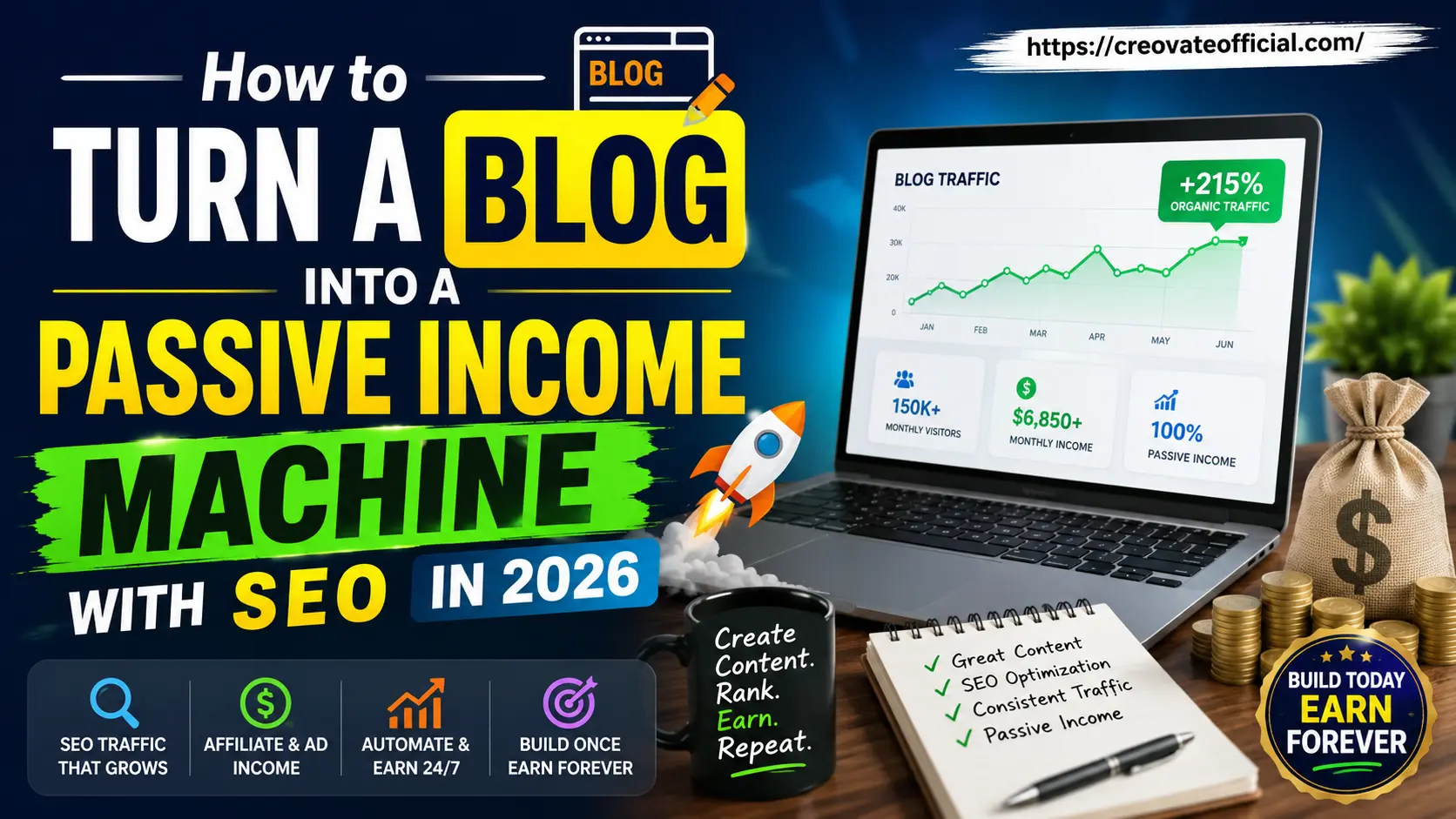
Understanding the Blog Passive Income Model in 2026
"Passive income" is a misleading phrase if it makes you picture money appearing with zero ongoing effort. What actually happens with a well-run blog is leveraged income: you do concentrated work up front — researching a niche, writing genuinely useful posts, building internal links, setting up monetization — and each piece of content keeps earning long after you've stopped actively working on it.
The mechanism is simple. Google (and increasingly AI search overviews) sends organic visitors to pages that best answer a search query. If your page ranks and includes a relevant affiliate link, ad placement, or digital product offer, a percentage of that traffic converts — every day, without you manually promoting the post again.
In 2026, three shifts matter more than they did a few years ago:
- AI Overviews and other AI-powered search features increasingly appear alongside traditional results, so content should be structured to answer questions clearly and directly.
- Helpful Content signals reward original experience and depth — generic, low-value content can perform poorly regardless of whether AI was used, while original experience, useful information, and genuine depth are increasingly important.
- First-party data (email) matters more because algorithm volatility means search traffic alone is a fragile foundation.
Step 1: Pick a Profitable, SEO-Friendly Niche
Your niche determines your ceiling before you write a single post. A great niche sits at the intersection of three things: genuine interest or experience, search demand, and monetization potential.
What makes a niche SEO-friendly
- Search volume with room to breathe — enough monthly searches to matter, without every keyword being dominated by billion-dollar sites.
- Commercial intent pockets — sub-topics where people are close to a buying or sign-up decision (comparisons, "best of" posts, how-to guides tied to products).
- Evergreen demand — topics people search year-round, not just during a seasonal spike.
Common mistakes
- Choosing a niche purely because it looks profitable, with no real interest — burnout kills more blogs than bad SEO does.
- Going too broad ("lifestyle blog") instead of a specific enough angle that Google can understand what you're an authority on.
- Ignoring your own unique angle or experience, which is exactly what Helpful Content systems now reward.
Step 2: Build an SEO Foundation That Compounds
Before publishing at volume, get the technical and structural basics right. These aren't glamorous, but they're what let every future post rank faster.
Technical basics
- Fast hosting and image delivery — page speed is a ranking factor and a conversion factor; slow sites lose both traffic and trust.
- Clean URL structure — short, descriptive slugs (like
/passive-income-seo) instead of auto-generated strings. - Mobile-first layout — most organic traffic now arrives on mobile; test everything on a phone first.
- Internal linking architecture — group related posts into topic clusters so Google understands your site's expertise map.
On-page fundamentals
- One clear primary keyword per page, used naturally in the title, H1, and first 100 words.
- Semantic/related keywords woven throughout — not stuffed, just naturally covering the topic.
- Descriptive meta titles and descriptions that earn the click, not just match the query.
Step 3: Create Content That Ranks and Converts
Ranking gets you traffic. Only the right content structure turns that traffic into income. Every post should do both jobs.
Match search intent exactly
A post targeting "best email marketing tools" needs a comparison and recommendations. A post targeting "what is email marketing" needs a clear explainer. Mismatched intent is the single most common reason well-written posts don't rank.
Structure for scanning and AI extraction
- Answer the core question in the first 2–3 sentences (this is also what AI Overviews tend to pull).
- Use descriptive H2/H3 headings that double as a mini outline of the answer.
- Break up dense sections with bullet lists, short paragraphs, and comparison tables.
Common mistakes
- Publishing generic, AI-flavored content with no original insight, example, or opinion — this is precisely what Helpful Content systems are built to demote.
- Burying the monetized recommendation at the very bottom of a 3,000-word post most readers never reach.
- Writing for search engines instead of the person who typed the query — write for the reader first, then optimize.
Step 4: Layer in Multiple Income Streams
Relying on a single income source is the most common reason "passive" blog income collapses overnight. A resilient blog stacks at least three of the following:
Affiliate marketing
Recommend tools and services you'd genuinely use, placed contextually inside how-to content rather than as generic banner ads. This is usually the fastest path to first income for a new blog because it doesn't require large traffic volume to be worthwhile.
Digital products
Templates, planners, and courses convert your own audience directly, without splitting revenue with an affiliate program. A simple example: a monthly budget planner sold directly from your own site captures 100% of the sale.
Display advertising
Needs meaningful traffic volume to be worthwhile, but becomes a reliable secondary stream once a blog is established — and it monetizes visitors who wouldn't have converted on an affiliate offer anyway.
Sponsored content and partnerships
Becomes available once you have traffic data to show brands. Best treated as a bonus, not a foundation, since it depends on outreach rather than search traffic alone.
Step 5: Automate the Repetitive Work
The difference between a blog that stays passive and one that quietly turns into a second full-time job is automation. Here's where tools genuinely earn their keep — not by writing your blog for you, but by removing the repetitive tasks around it.
Writing assistance and drafting
An AI writing assistant like Rytr is useful for first-draft outlines, meta descriptions, and product blurbs — the repetitive writing tasks around your core content, not the core content itself. The original insight, examples, and opinions still need to come from you; that's what both readers and search engines are actually rewarding.
Try Rytr →Image and page speed optimization
Since page speed affects both rankings and conversions, a dedicated image optimization and CDN tool such as FastPixel automatically compresses and serves images without manual work on every upload.
Check FastPixel →Short-form video repurposing
Repurposing blog content into short video clips extends reach without writing anything new. CapCut (free download, USA) is a straightforward option for turning a how-to post into a quick video summary for social platforms.
AI video and voiceover
For explainer or product-review content, an AI video tool like Synthesia can produce a presenter-style video from a script without filming anything — useful for adding a video element to posts that benefit from one.
Custom AI knowledge assistants
Tools like CustomGPT let you build a chatbot trained on your own content, which can sit on your site to answer reader questions and keep visitors engaged longer — a small but real signal for on-page engagement metrics.
Outsourcing specific tasks
Not everything should be automated with software. Design work, technical setup, or a video edit you don't want to do yourself is often faster and cheaper through a freelance marketplace like Fiverr.
Step 6: Build an Email List You Own
Search rankings fluctuate — algorithm updates, new competitors, or seasonal shifts can move traffic overnight. An email list is the one channel that isn't subject to someone else's algorithm.
How to build the list without slowing down your content
- Offer a genuinely useful lead magnet tied to the post's topic (a checklist, template, or starter kit — see the box above).
- Use an email marketing platform like GetResponse to automate welcome sequences, so new subscribers get value immediately without manual follow-up.
- Segment subscribers by the lead magnet they downloaded, so future emails stay relevant to what they actually wanted.
Common mistakes
- Collecting emails but never sending anything — an inactive list decays fast and stops converting.
- Only emailing when you have something to sell, which trains subscribers to ignore you.
Step 7: Track, Optimize, and Scale
Passive income still needs periodic maintenance — think quarterly check-ins, not daily work.
What to track
- Organic traffic trends per post, to catch ranking drops early.
- Click-through rate on affiliate links, to spot underperforming placements.
- Email list growth and open rates, to confirm the list is staying healthy.
How to scale once the foundation works
- Update your best-performing posts twice a year rather than only publishing new ones.
- Consolidate a full end-to-end funnel — landing pages, checkout, email — with an all-in-one platform such as Systeme.io if you're selling your own digital products directly.
- Reinvest early affiliate income into better hosting, a content editor, or outsourced tasks rather than personal spending, until the blog can fund itself.
Tool Comparison Table
A side-by-side view of the tools referenced throughout this guide, so you can see where each one fits in the workflow.
| Tool | Category | Best For | Pros | Cons |
|---|---|---|---|---|
| Rytr | AI writing assistant | Drafting outlines, meta descriptions, blurbs | Fast, affordable, many templates | Needs heavy editing for original voice |
| FastPixel | Image & speed optimization | Automating page speed on image-heavy blogs | Set-and-forget compression, CDN delivery | Adds a recurring tool cost |
| CapCut | Video editing | Repurposing posts into short-form video | Free, beginner-friendly, mobile app | USA-only free download noted here |
| GetResponse | Email marketing | Automated welcome sequences, list building | All-in-one automation, landing pages | Learning curve for advanced automations |
| Systeme.io | All-in-one funnel builder | Selling digital products directly | Free tier, funnels + email + courses in one | Less flexible design than dedicated tools |
| Synthesia | AI video generation | Presenter-style explainer videos | No filming or actors needed | Can feel less personal than real video |
| CustomGPT | Custom AI chatbot | On-site reader Q&A, engagement | Trained on your own content, on-brand | Setup time to train and tune well |
| Fiverr | Freelance marketplace | Outsourcing design, editing, one-off tasks | Wide talent pool, fixed-price gigs | Quality varies; vetting takes time |
Individual Tool Reviews
Rytr — AI Writing Assistant
Best for draftingRytr speeds up the first-draft stage: outlines, meta descriptions, and short product blurbs. It's not a replacement for original reporting or opinion, but as a drafting accelerator it saves real time on the repetitive writing that surrounds a post.
- Fast first drafts and templates
- Affordable entry tier
- Needs a human editing pass for voice and accuracy
Best for: bloggers who want to speed up outlines and on-page metadata, not replace their own writing.
Trust note: Pricing changes periodically — check the current plan on their site rather than relying on a fixed number here.
View Rytr →FastPixel — Image & Speed Optimization
Best for page speedFastPixel automates image compression and delivery, which matters directly for both rankings and conversion rate on image-heavy blog posts.
- Automatic, ongoing optimization
- Improves Core Web Vitals scores
- Another recurring subscription to budget for
Best for: blogs with lots of screenshots, product photos, or infographics.
View FastPixel →GetResponse — Email Marketing
Best for list buildingGetResponse handles the automation side of email — welcome sequences, segmentation, and landing pages for lead magnets — so list building doesn't require manual follow-up on every new subscriber.
- Full automation workflows
- Built-in landing pages
- More features than a brand-new blogger may need at first
Best for: bloggers ready to treat email as a primary channel, not an afterthought.
View GetResponse →Systeme.io — All-in-One Funnel Builder
Best for selling directlySysteme.io combines funnels, email, and course/product delivery in one platform, which is convenient once you're selling a digital product like a template or planner directly from your site.
- Free starting tier
- Everything in one dashboard
- Design flexibility is more limited than dedicated page builders
Best for: bloggers launching their first digital product without stitching together five separate tools.
View Systeme.io →Pros & Cons Summary: The Blog Passive Income Model
- Content keeps earning long after it's published
- Low startup cost compared to most businesses
- Multiple monetization streams can run simultaneously
- Skills (writing, SEO, marketing) compound and transfer elsewhere
- Slow start — meaningful income rarely arrives before 6–12 months
- Search algorithm changes can shift traffic without warning
- Requires ongoing maintenance, not zero effort
- Competitive niches take longer to break into
Which Tools Should You Start With? A Simple Decision Guide
If you're just starting out (limited budget)
Start with free or low-cost tools: CapCut for video, the free tier of Systeme.io for your first digital product page, and manual writing supplemented by Rytr only for outlines. Save paid tools for once a post proves it can rank.
If you have some traffic but no automation
Prioritize FastPixel for page speed and GetResponse for email — these compound the traffic you already have instead of chasing more.
If you're ready to sell your own product
Systeme.io or GetResponse's funnel tools let you launch a digital product like a planner or template without hiring a developer.
What to avoid
- Buying every tool on this list before you have consistent traffic — most of them only pay for themselves once there's an audience to serve.
- Choosing tools based on affiliate commission size rather than actual fit for your workflow.
Expert tip
Add one tool at a time and measure whether it actually saved time or improved a metric before adding the next. Tool-stacking without measurement is how "automation" quietly becomes its own time sink.
Frequently Asked Questions
How long does it take for a blog to become passive income?
Most bloggers see meaningful organic traffic between month 6 and month 12, and their first steady affiliate or digital product income between month 9 and month 18. Passive does not mean instant — it means the income keeps arriving after the upfront work is done.
Can you really make passive income from a blog in 2026?
Yes, but it's more accurately described as leveraged income. You do the work once — writing, optimizing, and building the SEO foundation — and it keeps paying out through ad revenue, affiliate commissions, and digital product sales long after the content is published.
How much money can a blog realistically make?
It ranges enormously, from a few dollars a month for a brand-new site to five or six figures monthly for established niche authorities. Income tracks traffic and monetization mix, not blog age alone.
Do I need to know SEO to make money blogging?
You need working knowledge, not an agency-level skill set. Keyword research, on-page structure, and basic technical hygiene cover the majority of the ranking opportunity for a new blog.
Is affiliate marketing or ad revenue better for a new blog?
Affiliate marketing usually pays better per visitor for a new site, since ad networks need high traffic volume before payouts become meaningful. Most profitable blogs combine both once traffic grows.
How many blog posts do I need before I start earning?
There is no fixed number. Some sites can begin earning with a small number of highly targeted, well-researched articles, while competitive niches may require many more pages. Focus on covering your audience's important search questions thoroughly rather than chasing a specific post count.
Should I build an email list even if I'm just starting out?
Yes. An email list is the one audience channel you fully own, and it becomes your most reliable income source once search rankings fluctuate, which they eventually will.
Final Verdict
Key takeaways: A blog becomes passive income through a sequence, not a shortcut — a focused niche, real SEO fundamentals, content that matches search intent, layered monetization, an owned email list, and just enough automation to keep the workload sustainable.
Our recommendation: Start with the free or low-cost tools until a handful of posts prove they can rank and convert. Then reinvest that early income into automation (FastPixel, GetResponse) and, once you have an audience, your own digital product through Systeme.io.
Next step: Grab the free Income Starter Kit above, pick one niche from your notes, and outline your first five posts around real search intent before writing a single word.
Get the Free Starter Kit